John Nicholas
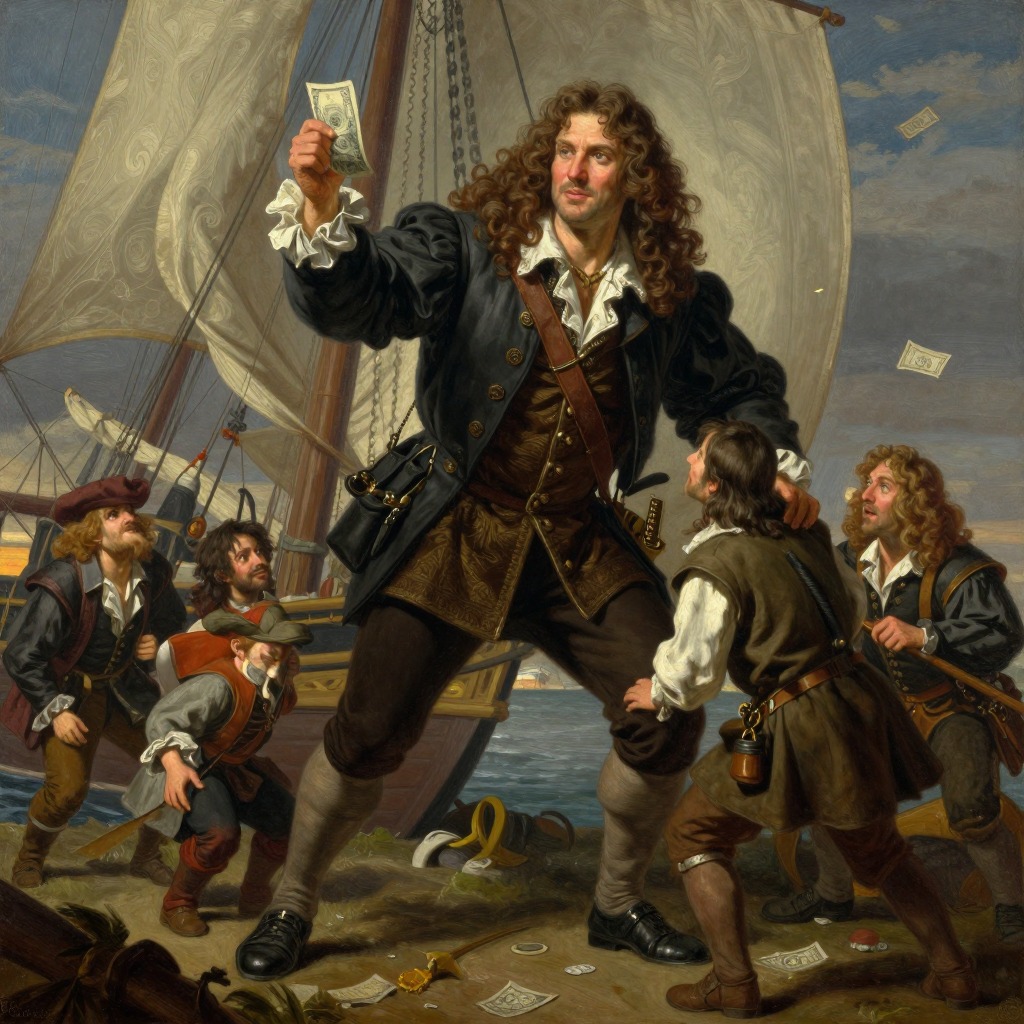
Captain John Nicholas, a Cornishman from Liverpool, commanded the Adventure, a merchant ship of three hundred tons bound for Surat. He was the master under whom Lemuel Gulliver set sail on his second voyage, departing from the Downs on June 20, 1702, only two months after Gulliver had returned from Lilliput. Nicholas's role, though brief in the narrative, is pivotal: his seamanship and judgment set the stage for the shipwreck that delivers Gulliver to Brobdingnag.
Background and Command
Nicholas was an experienced navigator familiar with the waters of the Indian Ocean. After a prosperous gale carried the Adventure to the Cape of Good Hope, the ship landed for fresh water and discovered a leak, forcing the crew to unload goods and winter there. During this delay, Nicholas fell sick with an ague, and the ship could not leave the Cape until the end of March. Once they set sail again, they had a good voyage until passing the Straits of Madagascar. At about five degrees south latitude, the winds—which normally blow a constant equal gale from the northwest from December to May—shifted on April 19, blowing with much greater violence and more westerly than usual. The storm continued for twenty days, driving the ship east of the Molucca Islands and about three degrees north of the equator. On May 2, the wind ceased and a perfect calm followed, but Nicholas, well experienced in those seas, warned the crew to prepare for another storm. The next day, the southern monsoon set in, bringing a fierce storm that carried the ship about five hundred leagues eastward, leaving even the oldest sailor unable to determine their location.
The Storm and Its Consequences
During the storm, Nicholas demonstrated his competence as a commander. The crew took in the sprit-sail, stood by to hand the foresail, and made foul weather preparations, looking the guns fast and handing the mizzen. The ship lay broad off, and they chose to spoon before the sea rather than try or hull. They reefed the foresail, hauled aft the foresheet, and kept the helm hard-a-weather. The ship wore bravely, but the sail split, and they hauled down the yard. Despite the violence of the storm, the ship remained staunch, the provisions held out, and the crew stayed in good health—though they were in utmost distress for water. Nicholas decided to hold the same course rather than turn more northerly, which might have brought them to the northwest parts of Great Tartary and into the Frozen Sea. On June 16, 1703, a boy on the topmast discovered land, and on the seventeenth they came in full view of a great island or continent. Nicholas cast anchor within a league of a shallow creek and sent a dozen men in the long-boat with vessels for water. Gulliver, desiring to see the country, obtained leave to join them. While the men wandered the shore, Gulliver walked alone and soon observed a huge creature wading after the boat, which forced him to flee inland. The boat returned safely to the ship, but Gulliver was left behind, beginning his captivity in Brobdingnag.
Narrative Significance
Captain Nicholas serves as a foil to Gulliver's restless nature. While Gulliver is driven by an insatiable desire to see foreign countries—a trait that leads him to leave his wife and family after only two months at home—Nicholas is a prudent and cautious mariner who reads the weather and prepares for danger. His accurate prediction of the storm and his skillful handling of the ship contrast with Gulliver's impulsive curiosity, which ultimately separates him from the ship. Nicholas himself does not appear again in the narrative; the Adventure sails on without Gulliver, and the captain's fate is unknown. His brief appearance, however, establishes the realistic maritime framework that grounds the fantastic voyage to Brobdingnag, and his competence underscores the randomness of fortune that delivers Gulliver into the hands of giants.